Water softeners in Muskego, WI
Muskego water softeners, starting from your address
Muskego has no single hardness number. The Muskego Water Utility publishes none, its mains follow a set of corridors instead of covering the whole city, and two of its own wells sampled on April 27, 2026 read about 3 and about 24 grains. So a quote here starts with where you live and what your water actually reads.
Mon to Fri, 7am to 5pm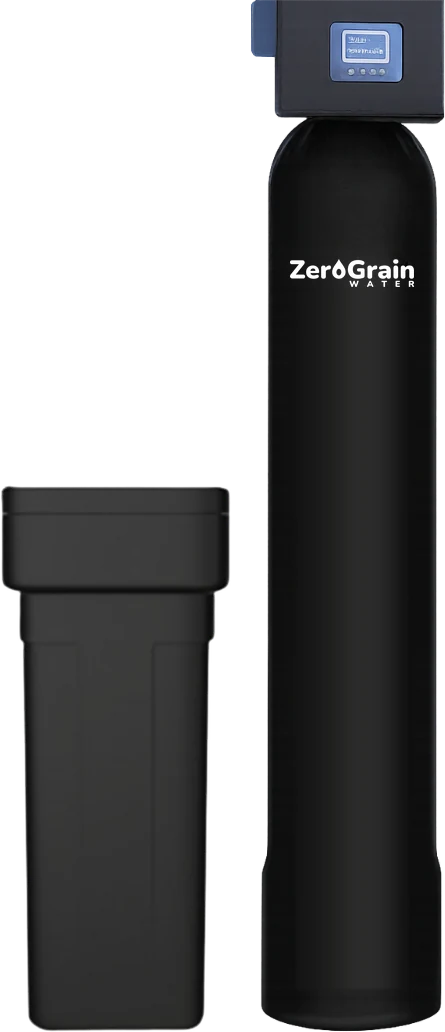
What is included
- Softener and brine tank for the whole house, sized from what the call turns up about your water and how many of you live there
- A kitchen-sink drinking faucet fed by reverse osmosis, packaged with every whole-home softener and not for sale by itself
- The plumbing done by a contractor who holds a Wisconsin plumbing license
- Your water tested on arrival, then a check at your tap, repeated until hardness comes back zero
- A single price, quoted over the phone, and no one turning up at your door to make a sale
- The quote line is open between 7am and 5pm on weekdays
Muskego water hardness
Source: Muskego Water Utility, Water page; Wisconsin DNR compliance sampling, Muskego Water Utility
Get your price
Send your details and we will call you with one price. Nobody comes to the house to sell you anything.
Muskego’s water follows the roads
For the most part, the utility’s mains serve a set of corridors: the stretch between and along Janesville and Woods roads, from the city’s western limits out to Tess Corners, plus Durham Drive, McShane Road and a handful of others. Away from those corridors, homes are on private wells.
So the first question on any Muskego call is a simple one: is your house on one of those corridors, or does it have its own well?
Why there is no single Muskego number
The utility does not publish a hardness figure. Instead it describes its water as relatively hard and notes that most people in Muskego choose to soften.
State DNR compliance samples show why a single figure would mislead. On April 27, 2026, one municipal well read 49.6 milligrams per liter and another read 405, roughly 3 and 24 grains per gallon. That is an eightfold gap inside one system on one day.
Off the corridors, it is your well and your number
Past the reach of the mains, each house pumps its own groundwater, and wells in this county often carry iron as well as hardness. A private well never gets a published figure, so the place to start is a lab report on your own well.
If a report lists iron, bring that figure to the call along with the hardness.
The number that counts is read at your tap
Being on the mains in Muskego does not come with a published hardness figure. The utility gives none, and its wells differ sharply from one another, so a corridor home needs its own reading as much as a well home does.
With figures this varied, the reading taken on install day is the one that counts. The day opens with a test of your water and closes with a check at your tap, repeated until hardness comes back zero.
Before that day, the call does the planning: your address or your well, how many of you live there, where your incoming line lands, and the spot an existing softener occupies.
What softening does, in plain terms
Hardness is calcium and magnesium dissolved in water. At the harder readings Muskego’s wells have shown, it spots glassware, leaves a film on fixtures and builds scale inside water heaters.
Softening swaps the calcium and magnesium for sodium; potassium chloride in the brine tank makes the trade potassium instead. During regeneration, salt from the brine tank recharges the resin.
Soft at one well, very hard at another
Put the two April 2026 samples on the USGS scale and they land at opposite ends of it. The 49.6 milligrams per liter reading sits inside the soft band, which tops out at 60. The 405 reading is more than twice the 180 mark where very hard begins.
Both came out of one municipal system within a single day. Nothing shows more plainly why nobody can hand a Muskego household its hardness number from a desk.
What the utility's own words tell you
The Muskego Water Utility does not print a figure, but it does describe its water: groundwater, relatively hard, and softened by most residents. That is the utility's account, not ours.
What it leaves out is which water reaches which street. So a corridor home and a well home both get their real number the same way here, from a reading at the tap, and a house that already softens has a setting worth asking about.
Tess Corners and the neighbors around Muskego
This site is built for Muskego, a city of 25,642 people as of the state's 2026 estimate, and for Tess Corners at the eastern end of the Janesville Road corridor. It also covers nearby New Berlin, Franklin, Vernon and Mukwonago.
Nothing published about Muskego's utility describes water in those neighboring places. A home there starts from its own supplier's figure or from its own well. The call takes it from there.
One drinking faucet for every Muskego kitchen, corridor or well
Nearly everything about Muskego water changes with the address. The drinking faucet does not: every whole-home softener brings a drinking-water faucet for the kitchen sink, run on reverse osmosis, on the corridors and off them, and it is not for sale on its own.
It is part of the one price on the call, so there is nothing separate to decide about it. The package is the same three pieces in every Muskego house: the softener, its brine tank and the drinking faucet.
The plumbing contractor fits the faucet on install day, on the same visit as the softener, once the bypass and the air-gapped drain line are in and before the last check at your tap. So the day has two stops in a Muskego house: the incoming line for the tanks, and the kitchen sink for the faucet.
How a Muskego softener is matched without a published figure
Where a utility publishes a figure, a quote can start from it. Muskego’s publishes none, so the match is built from what you can say about the house: corridor or well, any lab result, how many people live there, and where the incoming line and any old softener are. The hardness itself comes last, measured on install day before anything is connected.
The address comes first because it splits the city. A corridor home shares the utility’s mains but gets no published number with them; a well home off the corridors has only its own well. Oddly, a well home with a recent lab report is the Muskego house most likely to arrive with a figure attached.
Not sure whether the house is on the mains? The call goes ahead anyway. Janesville Road, Woods Road, Durham Drive and McShane Road are the main corridors, but a few other roads carry mains too, so the address narrows it down and a water bill from the Muskego Water Utility settles it. With no bill to check, the utility can answer it for your address.
On a well, read out the hardness line with its unit, the date on the sample and any iron result. The match there is about hardness only: bacteria and nitrate are outside a softener’s design, so the yearly bacteria test the Wisconsin DNR advises stays on your own calendar.
The head count comes next, because the softener has to suit the household’s daily water as well as its hardness. Two people and six people on the same corridor are different jobs before anyone has taken a reading.
The incoming line decides where the tanks stand, in the garage, the basement or a utility room, close to a drain and an outlet. An existing softener marks a spot that already works, and if anyone knows its setting and where that number came from, say so on the call. The new softener still takes its setting from the install-day reading, not from a borrowed figure.
Common questions
How hard is Muskego water?
There is no one answer. The utility publishes no figure, two of its wells read about 3 and 24 grains on the same day in April 2026, and nobody publishes anything for private wells.
Why not just use an average?
Because one well read about 3 grains and another about 24 on the same day. An average of those describes neither, and it tells you nothing about the water at your own tap.
Do most people in Muskego soften their water?
By the utility’s own account, yes. It calls its water relatively hard and says most residents use a softener.
Am I on municipal water or a well?
If your house is along the corridors the mains follow, such as Janesville Road, Woods Road, Durham Drive or McShane Road, it may be connected. Away from them, homes are on private wells. The address you give on the call answers it.
Is there a price before anyone comes out?
Yes. The price is given on the call, and no one turns up at your door to make a sale.
What else comes with the softener?
A kitchen-sink drinking faucet fed by reverse osmosis. It comes in the package with every whole-home softener and is not for sale by itself.
Is Muskego water soft anywhere?
One municipal well sampled on April 27, 2026 read 49.6 milligrams per liter, inside the USGS soft band. Another read 405, deep into very hard. Nothing published says which of them reaches a given street.
Do you serve Tess Corners?
Yes. Tess Corners sits at the eastern end of the Janesville Road corridor and is part of the area this site covers. Corridor or well is still the first question there.
The house came with a softener. What should it be set to?
No published Muskego figure can tell you, because the utility prints none and two of its wells read about 3 and 24 grains on the same April day. Only a reading of your own water can, such as a recent lab result. If you are calling about a replacement, mention the old setting; the new softener is set from the plumber’s reading at your tap on install day.
Does the utility soften the water before it reaches the corridors?
Not by its own account. The Muskego Water Utility describes its water as relatively hard and says most residents choose to soften it at home, which is why the reading at your own tap carries the weight on install day.